What is lawn thatching?
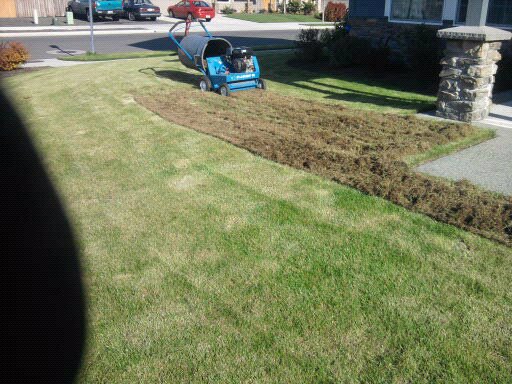
Lawn thatching removes some of the above ground stems and stolons that naturally develop over time. Dethatching removes excess vegetation to rejuvenate the lawn. We dethatch the lawn with a special machine called a thatcher.
What is lawn thatch?
Turf grasses grow in various ways above ground and below ground. From our top view we see the most recently emerged grass shoots. We trim these at a uniform height with a lawn mower and call the result a lawn. What we don’t see lies below these green shoots—the stems and root systems that support the top growth. As time passes this supporting biomass typically increases in size. The type of grass matters greatly.
- Colonial or creeping bent grasses develop above ground stems known as thatch.
- Red fescue and especially fine fescue can develop a thick layer of roots also called thatch.
- Ryegrass—the most prevalent turf grass in Oregon today.
- Kentucky bluegrass really does not thrive here, so we will skip it.
The origins of lawn thatching
Ryegrass, the most commonly cultivated lawn grass in western Oregon, so why did lawn thatching ever begin?
Well, ryegrass as a lawn grass is a relatively new entity. It came on the scene as recently as the 1970’s. Previously the native grasses—colonial bentgrass and fescue grasses were used in lawns. Sod farmers also used bluegrass, but it dies out in our climate in just a few years.
Bentgrass produces above ground stolens that gradually spread and end up looking like the end of a broom in late summer. The collective ensemble of straw-looking stolens is called thatch. Special rakes were developed to rake out the loose ends. This became known as dethatching. Machine manufacturers developed special machines with blades on a spinning shaft to reduce the manual labor.
Why overseed after thatching the lawn?
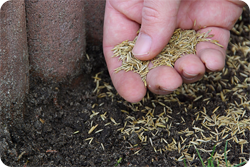
After your lawn has been dethatched, you have your one great opportunity to add back selected turf varieties into your lawn. Overseeding as it is called, is just that process. It has been used by golf courses for a long time but remains less common for smaller turf areas.
Ryegrass lacks an essential characteristic for a successful lawn. It multiplies only from seed and not vegetatively. This means that it won’t spread all by itself. In fact normal attrition of individual grass plants will decrease the plant population over time. What should you do? If you want to keep up a really nice lawn, overseed regularly!
If the lawn is aerated before thatching, the thatcher will break up the cores of soil and spread a bit of loose dirt on the surface of the lawn. This helps slightly for the new grass plants roots to grab hold of.
Adding a thin layer of mulch on top of the seed can be beneficial, especially on areas that have very little existing grass plants.
We have developed a special service that rolls all these processes up into one package.
- Aerate the lawn with a core aerator
- Dethatch the lawn
- Overseed with appropriate turfgrass cultivars.
- Mulch as needed on bare areas.
This process does not address any problems due to soil compaction, excessive shade, excessive moisture, or excessive wear from foot traffic. These may commonly be the true reason for the thinning out of the lawn.